Related Finance Terms
APR Full Form: Annual Percentage Rate — What Each Word Really Means for Your Wallet

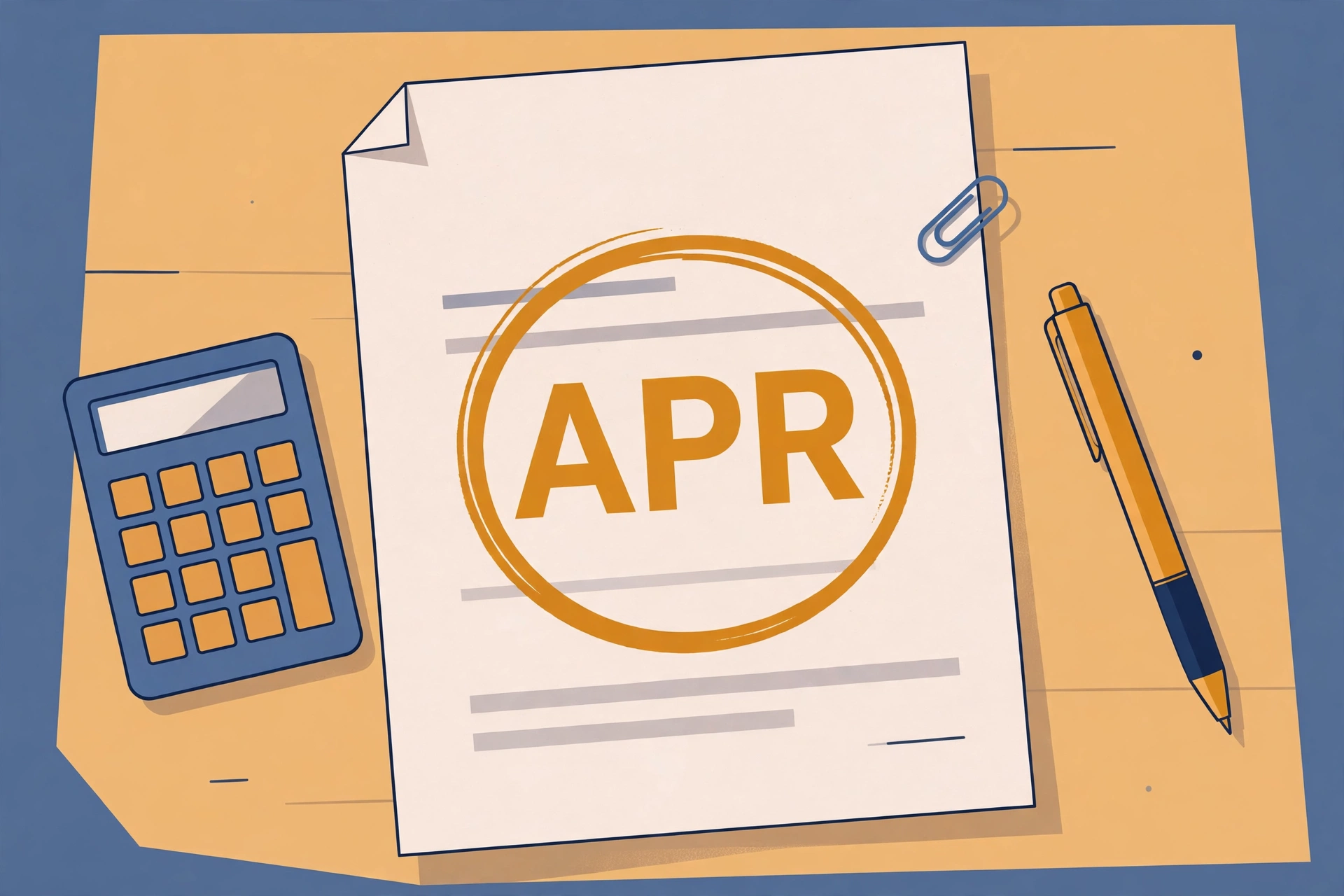
APR full form is Annual Percentage Rate. Three small words, one big number — and that number decides how much a loan, a credit card balance or a mortgage actually costs you over a year. Most borrowers glance at the interest rate and stop there. The APR goes further: it folds the interest rate together with the compulsory fees a lender charges, and expresses the whole thing as a single yearly percentage. If you have ever wondered why two loans with the same interest rate can cost different amounts, the answer is sitting in those three words. This guide unpacks the apr full form word by word, explains what APR means in plain English, and shows where the number shows up in real life.
APR Full Form: Annual Percentage Rate
The full form of APR is Annual Percentage Rate. It is the standard way lenders in the United States — and in most of the world — must disclose the yearly cost of borrowing. The word “annual” matters: it means the cost is measured over a full year, even if you borrow for a shorter or longer period. “Percentage” means the cost is shown as a share of the amount borrowed, so a $1,000 loan and a $100,000 mortgage can be compared on the same scale. And “rate” means it is a price — the price of using someone else’s money for a year.
That is the whole idea in one sentence: the APR is the yearly price of borrowing, shown as a percentage, including interest and most mandatory fees. Once you know the apr full form, the number stops looking like banking jargon and starts looking like what it really is — a price tag.
What Does APR Stand For — Word by Word
Ask “what does apr stand for” and the short answer is Annual Percentage Rate. Each of the three words carries a piece of the meaning.
Annual — the cost over one year
APR is always quoted per year. A credit card might charge interest monthly, and a short-term lender might quote a fee for two weeks, but the APR converts everything to a yearly figure. That is what makes comparison possible: a 24% APR on a card and a 7% APR on a personal loan are directly comparable, because both are yearly prices. Without the “annual” part, lenders could hide the true cost behind short periods — a small fee for two weeks can look harmless until you annualise it into triple digits.
Percentage — a share of what you borrow
The cost is expressed as a percentage of the borrowed amount. On a $10,000 loan at 10% APR, the yearly cost is roughly $1,000 before the effect of repayments. Percentages let you compare loans of different sizes: a 12% APR is a 12% APR whether the loan is $500 or $50,000.
Rate — the price of borrowing
A rate is a price per unit of time. Just as a hotel room has a nightly rate, borrowed money has a yearly rate. The APR is that rate — the amount you pay, per year, for every $100 you borrow. When the rate is high, borrowing is expensive; when it is low, borrowing is cheap. Everything else in lending — fees, charges, introductory offers — is noise around this one number.
What Is APR in Plain English?
So what is apr, once you strip away the jargon? It is the total yearly cost of borrowing, expressed as a percentage. It includes the interest rate plus most of the fees the lender requires you to pay to get the loan — origination fees, broker fees, closing costs on a mortgage, and similar charges. Fees that are optional, or that depend on how you behave (like late-payment fees), are generally not included.
Here is a simple example. Two lenders each offer you a $10,000 personal loan at 8% interest. Lender A charges no fees. Lender B charges a $500 origination fee. The interest rate is identical — 8% — but Lender B’s APR will be higher, because the fee is part of the yearly cost. The APR catches the difference that the interest rate misses.
One common confusion is worth clearing up early: APR is not the same as the interest rate, even though the two are often close. The interest rate is one ingredient; the APR is the whole dish. If a loan has no fees at all, the APR and the interest rate are the same number. The moment fees appear, the APR pulls ahead.
APR vs APY: Two Percentages Pointing in Opposite Directions
The apr vs apy comparison trips up a lot of people, because the two abbreviations look like twins. They are not. APR — Annual Percentage Rate — is what you pay when you borrow. APY — Annual Percentage Yield — is what you earn when you save or invest. One is a cost, the other is a return.
The second difference is compounding. APY includes compound interest: the interest you earn on your interest. APR, in its standard form, generally does not compound in the same way. That is why a savings account advertising a 4% APY earns you slightly more than a simple 4% interest rate would — the yield counts the compounding. When you are borrowing, you want the APR as low as possible. When you are saving, you want the APY as high as possible.
APR vs EAR: Nominal Rate vs Effective Rate
The apr vs ear question is the subtler cousin of APR vs APY. EAR stands for Effective Annual Rate. The APR is usually a nominal rate: it states the yearly cost without fully accounting for how often interest compounds within the year. The EAR is the effective rate: it includes the compounding, so it shows what you truly pay over a year when interest is charged monthly or daily.
For most ordinary loans, the difference is small. For a credit card that compounds interest monthly, the EAR will be slightly higher than the APR — a 24% APR compounded monthly works out to an effective rate of about 26.8%. Lenders are required to show you the APR, not the EAR, so the EAR is the number you calculate yourself when you want the complete picture.
Where You Will See APR in Real Life
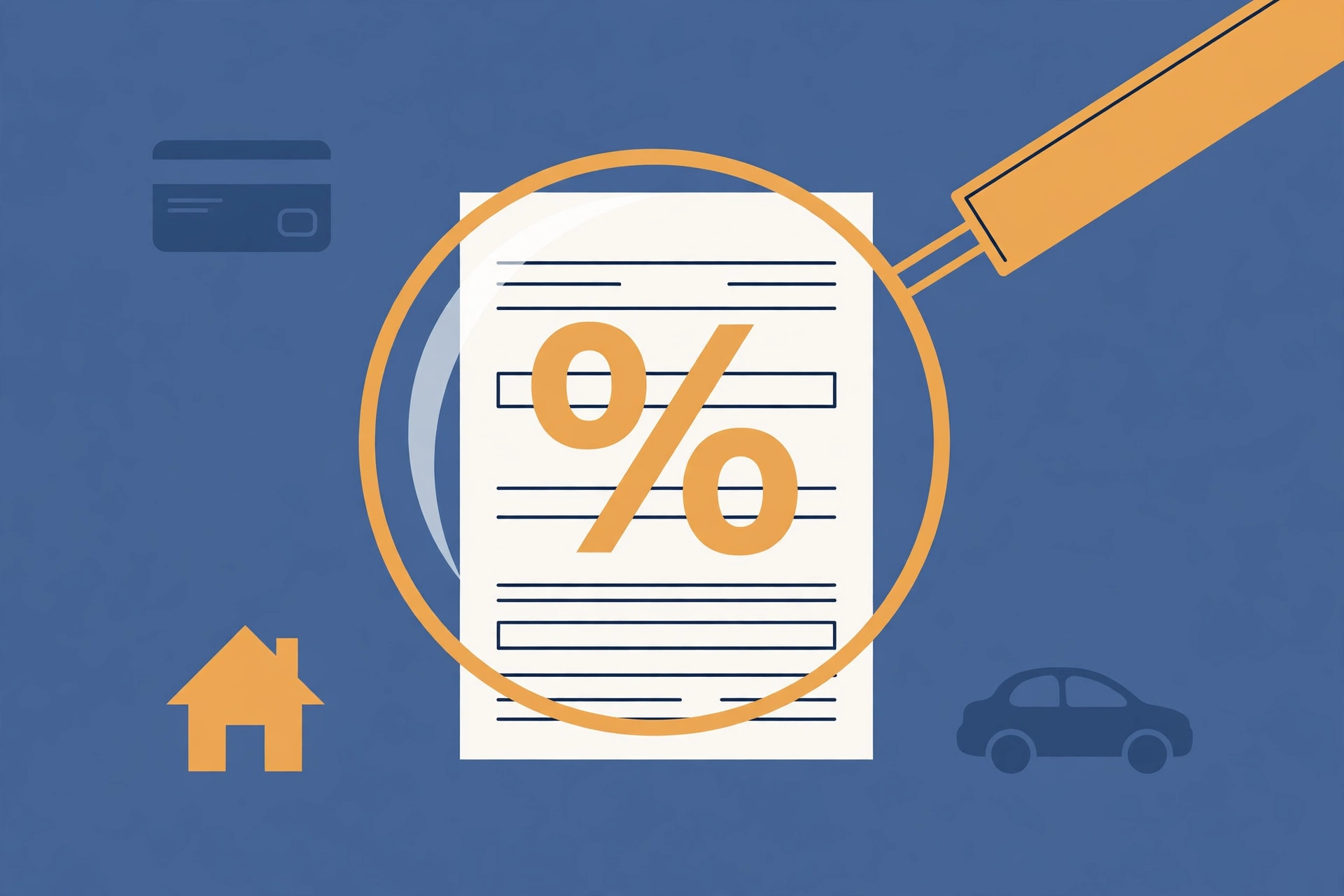
APR shows up on almost every borrowing product. The exact APR you are offered depends on your credit score, your income, the loan amount and the lender — which is why two people can be quoted very different APRs for the same product.
Credit cards — and how APR works on a credit card
Understanding how does apr work on a credit card is the single most useful APR skill, because cards are where most people meet APR first. A card’s APR applies to the balance you carry from month to month. If you pay your statement balance in full every month, during the grace period, you pay no interest at all — the APR never bites. The moment you carry a balance, interest is charged daily on the unpaid amount. Cards often have several APRs at once: a purchase APR, a balance-transfer APR and a cash-advance APR, each at a different level. The cash-advance APR is usually the highest of the three, and it starts charging interest immediately, with no grace period.
When you apply for a card, the lender must show the APR in a standardised summary called the Schumer box — a table, named after Senator Charles Schumer, that lists the APRs, fees and grace period in the same format on every card offer. Reading the Schumer box before you accept a card is the fastest way to compare offers: every card, same layout, same numbers.
Loans and mortgages
On a loan, the APR covers the interest plus the origination fee and other compulsory charges. How APR works on a loan is the detail that decides the real cost: two loans can advertise the same interest rate and still cost very different amounts once fees are counted. On a mortgage, the APR also folds in closing costs such as points and lender fees, which is why a mortgage APR is almost always higher than its interest rate. For mortgages, lenders often quote a representative APR — the rate that at least 51% of successful applicants actually receive.
Penalty APR: The Rate You Never Want to Meet
A penalty apr is the higher interest rate a card issuer can apply if you break the card’s rules — typically by missing a payment by 60 days or more. Penalty APRs are steep, often 29.99% or higher, and they can apply to your existing balance, not just to new purchases. Once triggered, a penalty APR can stay in place for six months or more. The defence is simple: pay at least the minimum on time, every month, and set up autopay so a forgotten due date never triggers it.
How to Lower Your APR
If your current APR feels too high, you are not stuck with it. Learning how to lower your apr is a practical money skill, and it usually starts with your credit score: a higher score earns a lower APR on almost every product. Paying bills on time, keeping your credit-card balances below 30% of their limits, and avoiding new applications for a few months before a big loan can all lift your score.
Then negotiate. Call your card issuer and ask for a lower APR — mention how long you have been a customer and any competing offers you have seen. Issuers say yes more often than people expect, especially for customers with a clean payment history. If that fails, a balance-transfer card with a 0% introductory APR can buy you time, and refinancing a loan at a lower APR can cut the total cost.
Frequently Asked Questions
What is the full form of APR?
APR full form is Annual Percentage Rate — the yearly cost of borrowing, expressed as a percentage of the amount borrowed, including the interest rate and most mandatory fees.
What does APR stand for in banking?
In banking, APR stands for Annual Percentage Rate. It is the standard disclosure number that lets you compare the true yearly cost of loans, credit cards and mortgages across different lenders.
Is APR the same as the interest rate?
No. The interest rate is only one part of the cost. The APR includes the interest rate plus most compulsory fees, so it is usually slightly higher — and it is the better number for comparing offers.
What is a representative APR?
A representative APR is the rate that at least 51% of people who are accepted for a product actually receive. It gives a realistic picture of the rate most borrowers get, rather than the lowest advertised rate.
What is a penalty APR?
A penalty APR is a much higher interest rate a card issuer can charge after a serious breach of the card terms, such as a payment more than 60 days late. It can apply to your existing balance and last for months, so paying on time is the best protection.
Conclusion
The apr full form — Annual Percentage Rate — is short, but it carries the most honest number in borrowing. Annual tells you the cost is measured over a year. Percentage tells you it scales with the amount you borrow. Rate tells you it is a price. Together, they give you a single figure that includes interest and fees, and lets you compare any two offers on equal terms. Whether you are choosing a credit card, comparing loans or reading a mortgage offer, start with the APR, check the Schumer box, and watch out for the penalty APR. To see the idea in full, read what APR means in plain English — the pillar guide this article builds on.

-
 APR Basics3 days ago
APR Meaning: The Real Cost of Borrowing, Explained in Plain English
-

 APR Basics2 days ago
How Does APR Work on a Loan — and Why Two “Identical” Loans Can Cost Very Different Amounts
-
 APR by Product6 hours ago
What Is a Good APR for a Car Loan? The 2026 Benchmarks That Tell You If Yours Is a Deal or a Rip-Off