APR by Product
What Is a Good APR for a Car Loan? The 2026 Benchmarks That Tell You If Yours Is a Deal or a Rip-Off


What is a good APR for a car loan? There is no single number that fits everyone — but there are clear benchmarks, and knowing them is the difference between signing a fair deal and overpaying by thousands. A good APR for a new car loan in 2026 is roughly 5–7% if your credit is strong, while a good APR for a used car loan is roughly 7–9%. If your credit is weaker, “good” shifts upward. This guide lays out the 2026 benchmarks by credit score, explains what decides your rate, and shows how to lower your APR before you sign. If you are still asking “what is apr”, start with what APR means in plain English: it is the total yearly cost of borrowing, interest plus most lender fees, expressed as one percentage.
There Is No Single “Good” Number
“Good” is always relative. A 6% APR on a new car is a solid deal for a borrower with a good credit score, but a borrower with excellent credit could reasonably expect something closer to 5%. A 12% APR looks high — until you realise the borrower has a fair credit score and is buying a used car, where 12% is close to the market average. Judging a car loan APR means comparing it with what similar borrowers are actually being offered right now, not with an ideal number from a different year or credit tier. Three things move the benchmark most: your credit score, whether the car is new or used, and the market itself. The benchmarks below use Experian’s Q1 2026 data on average auto loan APRs.
What Is a Good APR for a Car Loan in 2026? The Benchmarks by Credit Score
The table shows average APRs by credit-score band, for new and used cars, based on Experian’s Q1 2026 automotive finance data. If your offer sits at or below the average for your band, you are doing fine. If it sits well above it, keep shopping.
| Credit tier | Score range | New car APR | Used car APR |
|---|---|---|---|
| Super prime | 781–850 | 4.55% | 6.30% |
| Prime | 661–780 | 6.23% | 8.77% |
| Near prime | 601–660 | 9.67% | 14.03% |
| Subprime | 501–600 | 13.44% | 19.42% |
| Deep subprime | 300–500 | 16.01% | 21.77% |
The national averages behind these bands are roughly 6.8% for a new car loan and about 12% for a used car loan. As a rough rule of thumb for 2026: a new-car APR under 7% is competitive, and a used-car APR under 10% is competitive — provided your credit score is in the prime range or better. The spread is wide: on a $30,000 loan over five years, the difference between 5% and 15% APR is roughly $8,000 in interest.
New vs Used: Why the Same Credit Score Gets a Different Rate
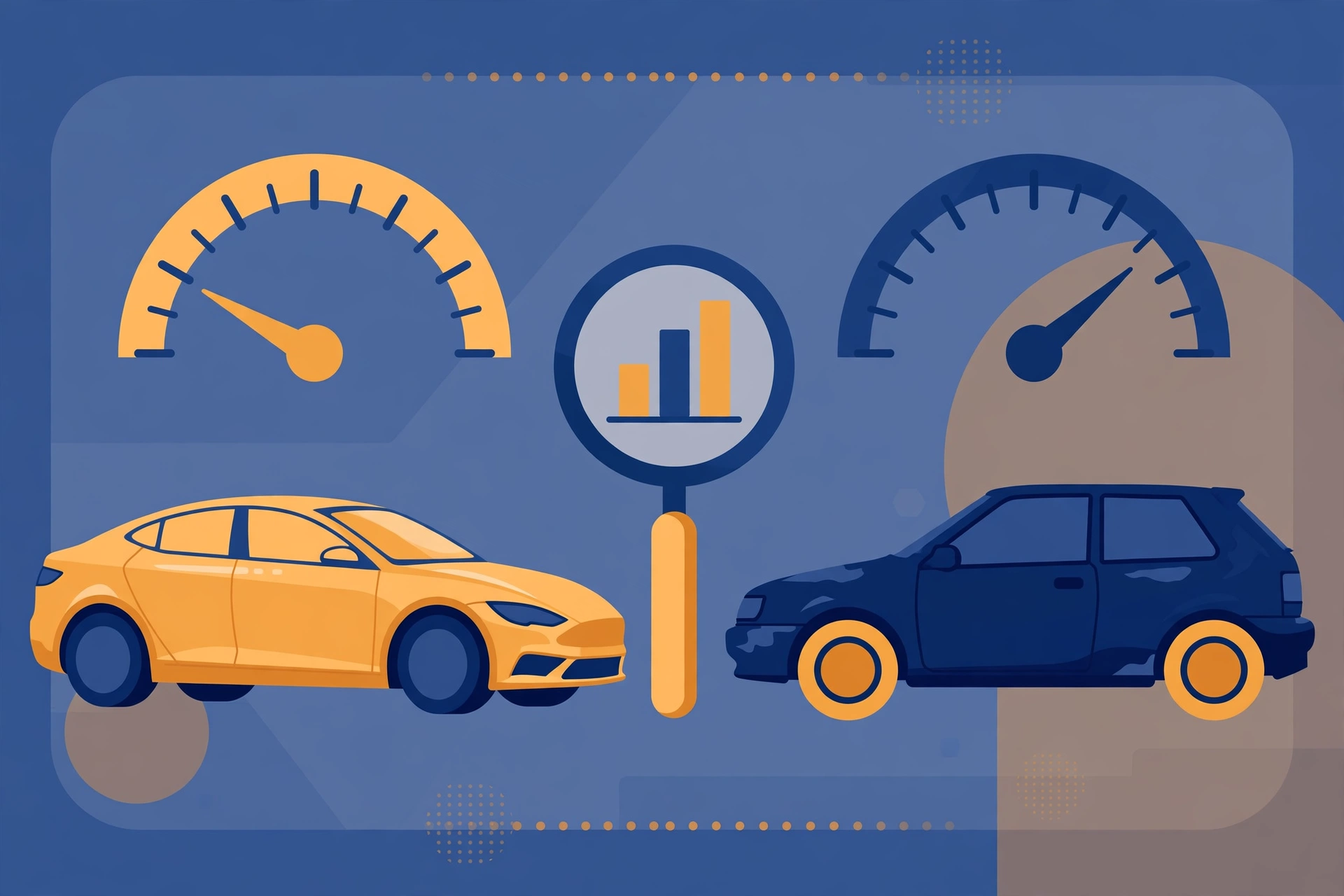
A borrower with a 750 credit score might be offered 5% on a new car and 7% on a used car. Same person, same income, same lender — different rate. The reason is risk. A new car has a known value, a manufacturer warranty and a predictable resale price, so the lender’s collateral is safe. A used car is harder to value, more likely to need expensive repairs, and worth less if the lender ever has to repossess it. Lenders price that extra risk into the APR.
Used-car APRs run about 2 to 5 percentage points higher than new-car APRs in every credit tier, and the gap widens as credit scores fall. When you compare offers, compare like with like — a 9% APR on a used car is not worse than a 6% APR on a new car. Judge each offer against the benchmark for its own category and your own credit band.
What Decides Your Car Loan APR?
Your credit score is the biggest single factor, but it is not the only one. Lenders build your APR from several pieces, and understanding them shows you which levers you can pull.
Your credit score and history
Lenders sort borrowers into tiers — super prime, prime, near prime, subprime, deep subprime — and each tier has its own rate range. A 100-point difference in credit score can mean a 3 to 6 point difference in APR. This is the factor worth the most effort, because it moves your rate more than anything else.
The prime rate
Behind every loan sits the prime rate — the benchmark rate banks charge their most creditworthy customers, which moves with the central bank’s policy rate. When the prime rate rises, auto loan APRs rise with it; when it falls, loan rates follow, usually with a lag. You cannot control the prime rate, but knowing it helps you judge timing.
Loan term
Longer loans usually carry higher APRs, because the lender’s money is at risk for longer. Long terms also tempt buyers into a trap: the monthly payment looks small, but the total interest paid is far higher, and you can end up owing more than the car is worth. As a rule, the shortest term you can comfortably afford is the cheapest loan.
Down payment and where you borrow
A bigger down payment lowers the amount you borrow and the lender’s risk, and it often earns you a slightly better rate. Putting 20% down on a new car — or at least 10% on a used one — is a good target. Where you borrow matters too: credit unions and banks often beat dealership financing on rate, while dealerships sometimes win on convenience and manufacturer promotions. Getting pre-approved by your bank or a credit union before you visit the dealer gives you a rate to beat.
How a Car Loan APR Compares With a Credit Card APR
It helps to put car loan rates in context. What is a good APR for a credit card? A good card APR for someone with excellent credit is usually under 18%, and average card APRs run above 22% — far higher than any car loan. The gap exists because a car loan is secured: the car itself is collateral, so the lender takes less risk. A credit card is unsecured, so the lender charges much more.
That is why comparing the two products directly is misleading: a 15% APR would be a terrible car loan rate and a decent credit card rate. The right comparison is always within the same product. One more difference matters: an apr on a credit card is usually variable and can rise, and cards carry a penalty APR — pay late and your issuer can raise your rate to around 30% or more.
APR vs APY and APR vs EAR: Don’t Mix Them Up
Two similar-looking terms cause constant confusion. APR vs APY is a borrowing-versus-saving distinction: APR is what you pay when you borrow, APY — annual percentage yield — is what you earn when you save, and APY includes compound interest. APR vs EAR is subtler: EAR, the effective annual rate, is the APR adjusted for how often interest compounds within the year. For most car loans the two numbers are close, because interest compounds monthly and the APR already reflects the true yearly cost. For a car loan, the APR on the offer sheet is the number to compare. If you want the full breakdown of the term itself, our guide to the APR full form explains what each of the three words — annual, percentage, rate — actually means for your wallet.
How to Lower Your APR Before You Sign
Knowing how to lower your apr is worth more than knowing the benchmark, because the benchmark only tells you where you stand — these steps move you to a better band. Start a few months before you buy, if you can.
1. Check and clean up your credit. Pull your credit reports, dispute any errors, and pay down card balances — using less of your available credit lifts your score, sometimes within a month or two. Even a 40- or 50-point improvement can move you into a better tier.
2. Shop at least three lenders. To learn how to get a lower apr in practice, get real offers — not estimates — from your bank, a credit union, and the dealership. Rate-shopping within a short window (usually 14 to 45 days) counts as a single enquiry on your credit report, so comparing offers will not damage your score.
3. Make a bigger down payment. More money down means a smaller loan and less risk for the lender, which often translates into a better rate — and it keeps you from owing more than the car is worth in the first year.
4. Choose a shorter term. A 48-month loan will usually carry a lower APR than a 72-month loan for the same car, and you will pay far less interest overall. If the shorter term’s payment is a stretch, consider a cheaper car rather than a longer loan.
5. Consider refinancing later. If your credit improves after you buy — or if market rates fall — refinancing can cut your APR without changing the car. Re-check your rate once a year, especially in the first two years. If you want the mechanics behind all of this, read our guide on how APR works on a loan.
Frequently Asked Questions
Is 10% APR good for a car loan?
It depends on your credit and the car. For a new car with prime credit, 10% is above average — the prime band averages around 6.2% — so keep shopping. For a used car with near-prime credit, 10% beats the band average of about 14%, so it is a reasonable deal. Always judge the number against your own band.
Is 20% APR bad for a car loan?
For most borrowers, yes. A 20% APR on a new car is above even the deep subprime average of about 16%, and on a used car it sits near the deep subprime average of about 21.8% — the most expensive band there is. If you are quoted 20%, get more offers, consider a cheaper car or a bigger down payment, or wait until your credit improves.
What credit score do I need for the best car loan APR?
The lowest rates go to super prime borrowers with scores of 781 and up, who averaged about 4.6% on new cars in Experian’s Q1 2026 data. Prime borrowers (661–780) still qualify for strong rates around 6.2%. As a practical target, a score of 670 or above puts you in reach of a competitive rate.
Does APR matter if I pay the loan off early?
Yes — but less. APR measures the yearly cost of borrowing, so the less time you borrow for, the less interest you pay in total. Paying a loan off early reduces your total interest whatever the APR. Just check there is no prepayment penalty in the loan agreement before you sign.
What is the difference between APR and interest rate on a car loan?
The interest rate is the cost of borrowing the money itself. The APR adds most lender fees — origination fees, documentation fees and similar charges — into the same yearly percentage. That is why the APR is the better number for comparing offers: two loans can have the same interest rate but different APRs, and the one with the higher APR costs more.
Conclusion
So, what is a good APR for a car loan? In 2026, a good APR for a new car is roughly 5–7% with strong credit, and a good APR for a used car is roughly 7–9% — but the honest answer always depends on your credit score, the car, and the market. Compare your offer with the benchmark for your credit band, not with someone else’s rate. And if your offer is above the benchmark, use the levers in this guide — a cleaner credit report, a bigger down payment, a shorter term, and at least three competing offers — before you sign.

-
 APR Basics3 days ago
APR Meaning: The Real Cost of Borrowing, Explained in Plain English
-

 APR Basics2 days ago
How Does APR Work on a Loan — and Why Two “Identical” Loans Can Cost Very Different Amounts
-
 Related Finance Terms1 day ago
APR Full Form: Annual Percentage Rate — What Each Word Really Means for Your Wallet