APR Basics
APR Meaning: The Real Cost of Borrowing, Explained in Plain English


Introduction
APR meaning is simple once you strip away the jargon: APR stands for Annual Percentage Rate, and it is the yearly cost of borrowing money, expressed as a single percentage. When a lender quotes you an APR, it is telling you what a loan or a credit card will cost you over a year — not just the interest, but most of the fees as well.
People search for “apr meaning” tens of thousands of times a month, usually because they are staring at a loan or credit card offer and trying to work out what they will actually pay. The interest rate alone cannot answer that question. The APR can, because it folds the fees into one number you can compare across lenders. This guide explains the apr meaning in plain English: what it includes, how it differs from the interest rate, APY and EAR, the types of APR you will meet, and how to use it to compare real offers.
What Is APR?
So, what is apr exactly? APR is the annual percentage rate — the APR full form is “annual percentage rate” — and it represents the total yearly cost of borrowing. What does APR stand for in practice? It stands for a standardised number that lets you compare loans side by side. A loan with a 10% APR and a loan with a 15% APR are not the same deal, even if their monthly payments look close: the APR tells you the more expensive one before you sign.
The APR exists because of the Truth in Lending Act, passed in the United States in 1968. The law requires lenders to disclose the APR before you borrow, so that the cost of credit is transparent. The Consumer Financial Protection Bureau (CFPB) describes the APR as the standard way to compare how much loans cost. Every lender must calculate it the same way, which is what makes it useful: an APR from one bank means the same thing as an APR from another.
One thing the APR does not do is include compounding within the year in the way an effective rate does. The APR is usually stated as a simple annual rate. That detail matters when you compare it with APY or EAR, as explained below.
What the APR Meaning Covers — and What It Does Not
The APR rolls the interest rate together with most of the fees a lender charges you as a condition of getting the loan. On a mortgage, that can include points, broker fees and some closing costs. On a personal loan, it can include the origination fee. On a credit card, it includes the interest that applies when you carry a balance.
Some charges sit outside the APR. A credit card’s annual fee is usually not part of the APR, and neither are late-payment fees or optional extras such as payment protection insurance. That is why two offers with the same APR can still differ slightly in total cost — always check the fee list as well as the headline number.
The practical rule is simple: if a loan has no fees at all, its APR and its interest rate are the same number. The bigger the fees, the wider the gap between the two.
APR vs Interest Rate
The interest rate and the APR measure related things, but they are not the same number. The interest rate is the cost of borrowing the money itself, expressed as a yearly percentage. The APR takes that rate, adds in most of the fees, and expresses the whole package as a single annual percentage.
| Interest rate | APR | |
|---|---|---|
| What it measures | The yearly cost of borrowing the principal | The yearly cost of borrowing, plus most fees |
| Fees included | No | Yes — origination fees, points, broker fees |
| Best use | Seeing the bare cost of the money | Comparing whole offers from different lenders |
| When they match | When the loan has no fees, the two numbers are identical | |
Imagine two personal loans of $10,000. Both advertise a 10% interest rate, but one charges a $300 origination fee and the other charges none. The fee-free loan has an APR of 10%. The loan with the fee has an APR above 10%, because the fee is part of what you pay for the money. The APR catches the difference that the interest rate hides.
APR vs APY
APR vs APY is one of the most common points of confusion in personal finance, because the two abbreviations look alike and both are annual percentages. They point in opposite directions: APR is what you pay to borrow, APY is what you earn on savings.
APY stands for annual percentage yield. It is the rate a savings account or certificate of deposit earns, and unlike APR, it does include compounding — the interest earned on interest. That is why a savings account advertising a 4% APY earns slightly more than a simple 4% interest rate would suggest. You will see APR on loans and credit cards, and APY on savings accounts and certificates of deposit. If a number describes money leaving your pocket, it is APR. If it describes money arriving in your account, it is APY.
APR vs EAR
APR vs EAR is a subtler comparison. EAR stands for effective annual rate, and it measures the true annual cost of borrowing once compounding inside the year is taken into account. If interest compounds monthly, the effective annual rate is slightly higher than the stated APR, because you pay interest on interest as the year goes on.
For most everyday comparisons — a credit card against another credit card, a personal loan against another personal loan — the APR is the number lenders are required to show you, so it is the number to compare. The EAR becomes important when you are comparing products with different compounding frequencies, or when you want the mathematically exact cost. As a rule of thumb: when compounding applies, the EAR is equal to or higher than the APR, never lower.
The Main Types of APR You Will See
APR is not one single rate. The same credit card can carry several different APRs at once, and each one applies to a different kind of transaction.
Fixed APR. The rate stays the same unless the lender changes it with notice. Fixed APRs are predictable, which makes budgeting easier.
Variable APR. The rate moves up and down with a benchmark, usually the prime rate plus a margin set by the lender. When the prime rate rises, a variable APR rises with it. Most credit cards in the United States use variable APRs.
Introductory APR. A low or 0% APR offered for a limited period, often 12 to 18 months on a new card. When the introductory period ends, the rate jumps to the card’s regular APR — check what that regular rate is before you apply.
Purchase APR. The rate applied to ordinary purchases made with a credit card. This is the rate most people mean when they talk about a card’s APR.
Balance transfer APR. The rate applied to balances moved from another card. It is often low or 0% for a promotional period, but a balance transfer fee — commonly 3% to 5% of the amount moved — usually applies.
Cash advance APR. The rate applied to cash withdrawn on a credit card. It is usually higher than the purchase APR, and interest starts immediately — there is no grace period on cash advances.
Penalty APR. A much higher rate a lender can apply if you pay late or break the terms of the agreement. A penalty APR can push a card’s rate above 29%, and it can stay in place for months. Paying on time is the simplest way to avoid it.
How Does APR Work on a Credit Card?
How does APR work on a credit card in practice? Most card issuers calculate interest using a daily periodic rate — your APR divided by 365 — applied to your average daily balance. If your card has a 24% APR, the daily rate is roughly 0.066% per day. Carry a $1,000 balance for a month and you owe about $20 in interest for that month (24% divided by 12 months is 2% a month, and 2% of $1,000 is $20).
The important detail is the grace period. If you pay your statement balance in full every month, most cards charge no interest at all on purchases — the APR only bites when you carry a balance from one month to the next. That is why the answer to “does APR matter if you pay in full?” is: not much for that month’s purchases, but it still matters as a comparison figure, and it matters a lot the moment you carry a balance. Cash advances and balance transfers usually have no grace period, so interest starts from day one.
Credit card APRs are high compared with other loans. According to Federal Reserve data, the average APR on credit cards that were assessed interest was above 21% in 2026. That is why carrying a credit card balance is one of the most expensive ways to borrow, and why paying more than the minimum — or paying in full — saves so much money.
How to Read the Schumer Box
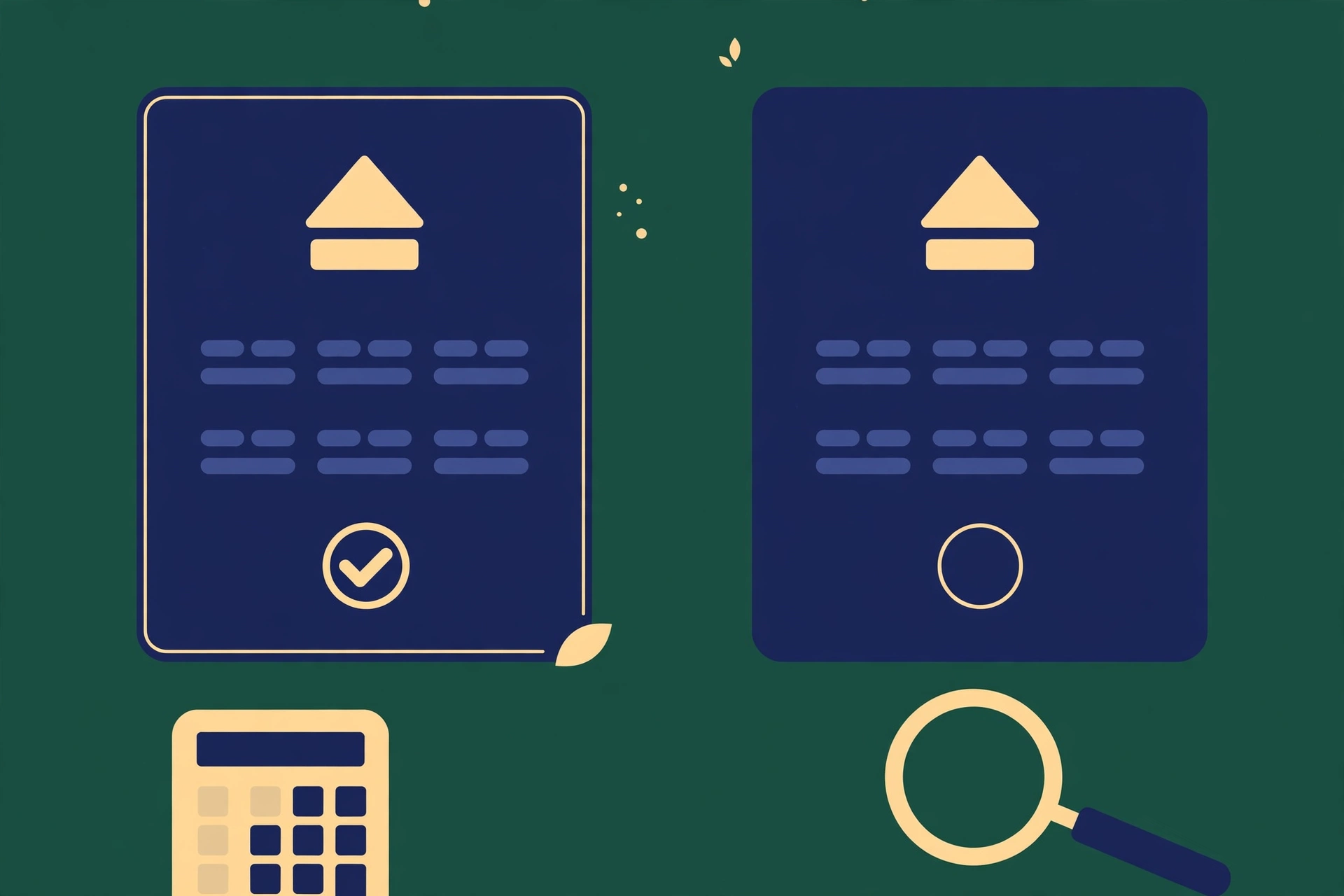
The Schumer box is the standardised table that appears on every credit card offer in the United States. It is named after Senator Charles Schumer, who sponsored the law requiring it. The box lists, in one place, the purchase APR, the balance transfer APR, the cash advance APR, the penalty APR, and the main fees: the annual fee, the balance transfer fee, the cash advance fee and the late-payment fee.
When you compare two cards, put their Schumer boxes side by side. The card with the lower purchase APR is usually cheaper if you carry a balance — but check the penalty APR and the fees too. A card with a slightly higher APR and no annual fee can be cheaper overall than a card with a lower APR and a $95 annual fee, depending on how much you borrow.
What Is a Representative APR?
A representative APR is the rate a lender advertises, and it comes with a catch: it is the rate offered to a typical borrower, not necessarily the rate you will get. Your actual APR depends on your credit score, your income and the amount you borrow. In the United Kingdom, the rules require that at least 51% of successful applicants are offered the advertised representative APR — the rest may be offered a higher one.
That is why an advertised “representative APR” should be treated as a starting point, not a promise. When you apply, the lender gives you a personalised APR. Compare that personalised figure across lenders, not the advertised one, before you accept an offer.
A Worked Example: The Same Loan at Two APRs
Numbers make the APR meaning concrete. Take a $10,000 personal loan repaid over three years, with no extra fees, so the APR and the interest rate are the same.
- At 10% APR, the monthly payment is about $323, and you repay about $11,615 in total — around $1,615 of interest.
- At 15% APR, the monthly payment is about $347, and you repay about $12,479 in total — around $2,479 of interest.
Five percentage points of APR cost roughly $860 extra over three years on a $10,000 loan — and the gap grows with bigger loans and longer terms. That is the real power of the APR: it turns a small-looking percentage difference into a dollar figure you can feel.
How to Compare APRs Before You Borrow
Use this short checklist whenever you compare loan or credit card offers.
- Compare like with like. The APRs of two loans are only comparable if the loan amounts and terms are similar.
- Check fixed versus variable. A variable APR can rise; a fixed APR gives you certainty. Know which one you are being offered.
- Look inside and outside the APR. Fees included in the APR are already counted; fees outside it — annual fees, late fees — are not. Add them up yourself.
- Read the penalty APR. One late payment can trigger a penalty APR above 29% for months. Set up autopay for at least the minimum.
- Watch the introductory rate. A 0% introductory APR is a good deal only if you know the regular APR that follows it.
- Judge the total cost, not the monthly payment. A longer term lowers the monthly payment but raises the total interest. The APR plus the term tells you the true price.
Frequently Asked Questions
What does APR stand for?
APR stands for Annual Percentage Rate. It is the yearly cost of borrowing money, expressed as a percentage, including the interest rate and most of the lender’s fees.
What is APR in simple words?
APR is the true yearly price of borrowing. If you borrow $1,000 at 12% APR and repay it over a year with no extra fees, the borrowing costs you roughly $120. The higher the APR, the more expensive the loan.
Is APR the same as the interest rate?
No. The interest rate is only the cost of borrowing the money itself. The APR adds most fees on top of the interest rate. When a loan has no fees, the two numbers are the same; when it has fees, the APR is higher.
What is a good APR?
It depends on the product and your credit score. For a credit card, anything well below the average — which was above 21% in 2026 — is good. For a personal loan or a mortgage, single-digit APRs are common for borrowers with strong credit. Whatever the product, a lower APR is always cheaper.
Does APR matter if you pay in full?
For credit card purchases, if you pay your statement balance in full every month within the grace period, you pay no interest, so the APR does not cost you anything that month. It still matters as a safety net: the moment you carry a balance, the APR decides how much interest you pay.
Conclusion
The APR meaning is the yearly price of borrowing, stated as one percentage that includes interest and most fees. It is not the same as the interest rate, it is not the same as APY, and it is not the same as the effective annual rate — but it is the number lenders must disclose, which makes it the fairest way to compare offers. Check the APR, check whether it is fixed or variable, read the Schumer box, watch out for the penalty APR, and judge the total cost rather than the monthly payment. Do that, and a three-letter abbreviation will never catch you out again.

APR Basics
How Does APR Work on a Loan — and Why Two “Identical” Loans Can Cost Very Different Amounts

How Does APR Work on a Loan — and Why Two “Identical” Loans Can Cost Very Different Amounts
So, how does apr work on a loan? In plain English: the annual percentage rate (APR) is the single number that tells you what borrowing will really cost you over a year — not just the interest rate the lender advertises, but the interest plus most of the fees, rolled into one yearly percentage. Two loans can carry the same interest rate and still cost very different amounts, and the APR is how you spot the difference before you sign.
What Is APR on a Loan?
APR stands for annual percentage rate, and the apr full form is simply “annual percentage rate”. On a loan, it expresses the total yearly cost of borrowing as a percentage of the amount you borrow — the interest rate plus most mandatory fees, such as origination and processing charges. So when someone asks what is apr on a loan, the honest answer is: it is the price of the loan, expressed as one yearly number. A loan with a 7% interest rate and a $300 origination fee might carry an APR of 7.8% — the interest rate alone would hide that fee, while the APR folds it in. Under the US Truth in Lending Act, lenders must disclose APR clearly, so borrowers can compare offers on the same basis.
APR vs Interest Rate: The Difference That Costs You Money
The interest rate is only one part of the cost of borrowing. It is the price of the money itself — the percentage charged on the amount you still owe. APR starts with that interest rate and adds the fees, then spreads the whole cost over a year.
Here is a simple comparison. Imagine two personal loans of $10,000 over three years:
- Loan A: 6% interest rate, no fees. APR: 6%.
- Loan B: 6% interest rate, plus a $300 origination fee. APR: about 7%.
Both loans advertise “6% interest”, but Loan B costs you $300 more. The APR makes that visible. Whenever the APR is higher than the interest rate, fees are doing the extra work. When the two numbers are identical, the loan has no fees included in the APR. Note that late-payment fees are not in the APR, because they only apply if you pay late, and optional products such as payment-protection insurance you choose to buy are usually excluded too. APR shows the cost of borrowing as agreed — not the cost of mistakes or extras.
How APR Is Calculated on a Loan
You do not need to calculate APR by hand — lenders must disclose it — but the idea is simple. For a basic loan: APR = ((Interest + Fees) ÷ Loan amount) × (365 ÷ Loan term in days) × 100. For instalment loans, lenders use a more precise actuarial method: they find the rate at which the present value of all your scheduled payments equals the amount actually financed (the loan amount minus upfront fees). Because fees reduce the cash you actually receive while your payments are calculated on the full balance, the APR comes out higher than the quoted interest rate whenever fees exist.
A worked example makes this concrete. Take a $10,000 personal loan over 3 years at 6% interest with a $200 arrangement fee: interest over the life of the loan is roughly $950, fees add $200, and the total cost of borrowing is about $1,150 — an APR of about 7.2%. The principle is the same whatever the numbers: APR turns the fee into a yearly rate, so you can compare it with any other loan’s APR directly. Remember too that APR assumes you keep the loan for its full term — repay early, and the fee is spread over fewer months, so the real yearly cost of the fee was higher than the APR suggested.

Fixed APR vs Variable APR
On most loans, the APR is either fixed or variable. A fixed APR stays the same for the whole life of the loan, so your monthly payment does not change — most personal loans, car loans, and fixed-rate mortgages work this way. A variable APR moves with a benchmark rate, usually the prime rate: when the benchmark rises, your APR and your payment rise with it. Variable APR is common on credit cards, home equity lines of credit, and some adjustable-rate mortgages. A variable APR can start lower than a fixed one, which looks attractive — but a loan that is cheap in year one can become expensive in year three. When comparing a fixed and a variable offer, ask what the variable rate could rise to, not just where it starts.
How Does APR Work on a Credit Card?
Many people first meet APR on a credit card statement, and it works a little differently there. How does apr work on a credit card? The card’s APR is the yearly rate applied to any balance you carry from month to month. If you pay your full statement balance by the due date, most cards charge no interest at all — the APR never gets applied, thanks to the grace period.
APR vs EAR: Which Number Tells the Truth?
People sometimes confuse APR with the effective annual rate, but the two measure different things. In the apr vs ear comparison, the difference is compounding. APR is usually quoted as a simple, non-compounded yearly rate: it spreads the cost evenly across the year. The effective annual rate (EAR) accounts for compounding — the effect of interest being charged on interest when it compounds monthly or daily.
For most standard loans, the APR is the number lenders must disclose and the one you should compare. But if a loan compounds interest in an unusual way — daily compounding on a short-term loan, for example — the EAR will be higher than the APR, and the gap tells you how much compounding is costing you. As a rule: when two loans have the same APR but different compounding frequencies, the one that compounds more often is the more expensive one in reality.
APR vs APY: Borrowing Cost vs Saving Return
The apr vs apy question comes up constantly. They are mirror images — but on opposite sides of the money. APR is the cost of borrowing: what you pay the lender. APY — annual percentage yield — is the return on saving: what the bank pays you, including compound interest. The practical takeaway is simple: when you borrow, compare APRs; when you save, compare APYs. Never compare one against the other — they measure opposite directions of money. If you are still unsure what APR means in plain English, that guide covers the definition and the borrowing costs it captures.
The Schumer Box: Where the APR Lives on Your Offer
If you want to find the APR on a real loan or card offer, look for the Schumer box — the standardised disclosure table lenders must show. Named after Senator Charles Schumer, who championed the rule, it lists the APR, the interest rate, the fees, and the grace period in one box, in the same format every lender uses. Learning to read the Schumer box is one of the most useful money skills there is: it lets you compare two offers line by line, instead of comparing one lender’s headline rate with another lender’s fine print.
Penalty APR: The Rate That Punishes Late Payments
There is one APR that borrowers meet only when things go wrong: the penalty apr. If you pay late — often 60 days or more past due on a credit card — the lender can raise your APR to a penalty rate, frequently close to 30%, and apply it to your existing balance. It can stay in place for six months or more of on-time payments before the lender must review it. The lesson is blunt: a single badly late payment can re-price your whole balance, so the APR you signed up for is not always the APR you end up paying.
Representative APR: The Rate Most People Actually Get
When a lender advertises a loan, the headline rate is usually the representative apr — the rate that at least 51% of successful applicants will receive. The other 49% may be offered a higher rate, depending on their credit score, income, and history. This is why the advertised APR is a starting point, not a promise. Your personal APR — the one in your actual offer — is what matters.
How to Lower Your APR
If the APR on your loan feels high, you have more options than simply accepting it. Here is how to lower your apr in practice: improve your credit score before you apply — pay bills on time and keep card balances low, since even a modest score improvement can move you into a cheaper pricing band. Compare at least three offers, because lenders price the same borrower very differently; a one-percentage-point difference on a $10,000 loan over three years is worth roughly $150. Ask your current lender to reduce your rate — card issuers will sometimes lower a long-standing customer’s APR when asked. Consider a balance transfer or refinance: moving a high-APR card balance to a 0% introductory APR card can cut the cost sharply, but watch the transfer fee and the rate that applies after the introductory period ends.
Frequently Asked Questions
Is APR the same as the interest rate?
No. The interest rate is only the cost of borrowing the money itself. APR includes the interest rate plus most mandatory fees, expressed as a yearly percentage. APR is always equal to or higher than the interest rate on the same loan.
Does APR matter if I pay my credit card in full every month?
For that month, no. If you pay your full statement balance by the due date, the grace period means no interest is charged, so the APR never applies. APR matters the moment you carry a balance — and it matters a lot then, because card APRs are usually far higher than loan APRs.
Can my APR change after I take out a loan?
With a fixed APR, no — it stays the same for the life of the loan. With a variable APR, yes — it moves with its benchmark rate, usually the prime rate. And a penalty APR can be applied if you pay very late, even on a fixed-rate card.
What is a good APR on a loan?
It depends on the loan type and your credit profile. Personal loans for borrowers with good credit often sit in single digits; credit cards are commonly 20% or higher. The real test is comparison: the best APR for you is the lowest one you are personally offered among several lenders for the same loan type and term.
Conclusion
How does APR work on a loan? It takes the interest rate, adds most of the fees, and turns the total into one yearly percentage you can compare across lenders. That is the whole job of APR — and it does it well, as long as you remember its limits: it assumes the full term, it ignores late fees and extras, and it only compares fairly between loans of the same length and structure. Use APR as your first filter — it removes the worst offers quickly — then look at the total you will repay and the early-repayment terms before you decide.
Before your next loan, read the APR first, check the Schumer box, and compare at least three offers on their personal APRs. The lender that quotes the lowest interest rate is not always the cheapest — but the lender with the lowest APR, on the same terms, usually is.
This article is for education only, not financial advice. Rates and terms vary by lender and your credit profile — always read the full agreement before borrowing.
-

 APR Basics2 days ago
How Does APR Work on a Loan — and Why Two “Identical” Loans Can Cost Very Different Amounts
-
 Related Finance Terms1 day ago
APR Full Form: Annual Percentage Rate — What Each Word Really Means for Your Wallet
-
 APR by Product6 hours ago
What Is a Good APR for a Car Loan? The 2026 Benchmarks That Tell You If Yours Is a Deal or a Rip-Off
Pingback: How Does APR Work on a Loan? A Plain-English Guide.
Pingback: APR Full Form: Annual Percentage Rate Explained
Pingback: What Is a Good APR for a Car Loan? 2026 Benchmarks